How to Develop an Employee Leave Policy During COVID-19

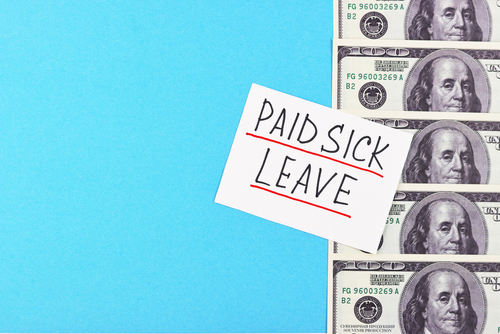
Employee Leave Policy During COVID-19According to the United States Department of Labor’s Wage and Hour Division, the Families First Coronavirus Response Act addresses how select businesses must give their workers paid sick leave or expanded family and medical leave under permitted circumstances in light of COVID-19.

Effective starting April 1, 2020, the following will be in effect through Dec. 31, 2020.

1. If the worker cannot perform his duties because he is relegated to a quarantine, as mandated by a medical professional or a local, state or federal government, or if he is symptomatic with COVID-19 and seeking a diagnosis to confirm it, he is entitled to as many as 80 hours of paid sick leave at his normal rate of compensation.

OR

2. The worker may be due no less than 80 hours of paid sick leave at two-thirds of the worker’s normal compensation if the individual can’t perform her work duties because of a justifiable reason to look after another person required to quarantine – be it because of a doctor’s diagnosis or by a local, state or federal government order. It can also apply to an employee if she needs to care for a minor child (younger than 18 years old), if her school or daycare center is shuttered or otherwise unable to permit the minor child to attend due to the coronavirus.

The Act also includes as many as 10 additional weeks for expanded family and medical leave, paid at two-thirds the worker’s normal wages. This can occur where the worker, who has been an employee of the business for no less than 30 calendar days, cannot work because of a justifiable reason to look after a child due to closure of a school or daycare center.

Employees of both select public employers and private businesses that have fewer than 500 employees may be eligible for the expanded family and medical leave and paid sick leave from the FFCRA. However, this may not apply to select businesses with 50 or fewer workers. For example, small businesses with less than 50 workers may be exempt from the requirement to give leave for school or child care unavailability if fulfilling the leave requirements would put the business’ ability to survive at risk.

When it comes to federal employees, it’s important to note how the FFCRA changed their situation. For federal employees subject to Title II of the Family and Medical Leave Act, they are eligible for the aforementioned provision referring to paid sick leave. However, the COVID-19 amended family and medical leave provisions in the FFCRA are not the same for federal employees.

All workers of covered employers are eligible for two weeks of paid sick time for applicable grounds due to the coronavirus. Workers on the payroll for a minimum of 30 days may have up to 10 weeks of compensated family leave to look after minor dependents, based on the individual situation caused by the coronavirus.  

When Leave May Be Permitted

Workers are qualified to receive paid sick time, according to the FFCRA, if they can’t perform their duties, including remotely, due to any of the following circumstances.

  1. Under a local, state or federal quarantine or isolation mandate due to the coronavirus.
  2. A medical professional has recommended a patient quarantine himself because of COVID-19.
  3. An individual is symptomatic consistent with COVID-19 and seeking a medical opinion.
  4. The worker is caring for another person in either category 1 or 2.
  5. The employee is caring for a child whose school or daycare facility is shuttered or otherwise inaccessible due to the coronavirus.
  6. A worker is facing an almost identical condition detailed by the Secretary of Health and Human Services, in consultation with the Secretaries of Labor and Treasury.

Workers, also in the FFCRA, are eligible for expanded family leave if they are looking after a child whose learning center or daycare is shuttered or otherwise inaccessible because of COVID-19.

When it comes to categories 1, 4 or 6, full-time workers are qualified to have 80 hours of leave. Part-time workers are eligible for calculated leave based upon an average of a 14-day time-frame.

For category 5, full-time workers are eligible for as many as 12 weeks of leave. This consists of two weeks of paid sick leave and an additional 10 weeks that are paid expanded family and medical leave – all 12 weeks at 40 hours per week.

When it comes to paid sick time under the FFCRA, it doesn’t carry over to the following year. Also, workers may not be compensated for untaken leave if they retire, leave voluntarily or involuntarily, or otherwise are no longer with their employer.

For the first three categories, workers on leave qualify for compensation at their normal rate or the prevailing minimum wage over a 14-day period, whichever rate is more.

For categories 4 and 6, workers on leave qualify for two-thirds of their normal compensation or the prevailing minimum wage, whichever rate is more (no more than $200 a day or $2,000 per two-week period).

For the fifth category, workers taking leave similarly qualify for two-thirds of their normal compensation or the prevailing minimum wage, whichever rate is more (no more than $200 per day or $2,000 over two weeks).

While each organization must do its due diligence to see how the law applies to its employees, this law gives businesses and workers more flexibility to balance work and family responsibilities.

Hiring in the Age of Coronavirus

Hiring in the Age of CoronavirusThe U.S. job market gained 2.5 million jobs during the month of May, dropping the unemployment rate to 13.3 percent, according to the U.S. Bureau of Labor Statistics. There’s likely been a lot of rehiring, with more to come as the economy continues reopening. However, until social distancing becomes a thing of the past, hiring effectively will take some pivoting during the pandemic.

Finding Candidates Virtually

Employers looking to interview and hire candidates can take advantage of LinkedIn during the pandemic. Along with providing a branding opportunity, the platform gives businesses a hybrid social media and marketing tool. Leveraging 1st Connections on LinkedIn, participating in discussion groups, demonstrating one’s industry knowledge, or simply looking for prospective candidates are effective uses of LinkedIn.

Much of the LinkedIn user base is comprised of people looking for work, either as an employee or on a contract basis. Businesses can reach and retain an audience by distributing content through LinkedIn. Along with taking advantage of using LinkedIn advertising, sharing new content with existing followers can be direct and unimpeded. The site also provides a connection to a business webpage to start the application process, in addition to listing the job requisites on the business’s LinkedIn profile.   

A good way to engage applicants virtually is by encouraging interested candidates to produce one-way video interviews through digital and social media requests that they can record on their own, detailing experience, education, etc. Then hiring managers can review these submitted videos remotely on their own time and arrange initial (or additional) interviews for select candidates. Other recommendations include refreshing job postings and posting links to jobs via the company’s social media.

Safely Finding and Interviewing Candidates

Because the ongoing pandemic requires certain safety practices, such as social distancing, interviewing candidates in-person might not be practical or safe. Instead, conducting interviews remotely is the next best thing. Speak with candidates over real-time video conferencing, such as Zoom or Skype.

A survey from Gartner found that 48 percent of employees will work at least some portion of the time remotely, post COVID-19. This is compared to 3 in 10 workers who performed some of their work remotely pre-pandemic. Gartner has a few ideas on how Human Resources professionals can on-board employees virtually to increase efficiency and optimize their performance.

Another way to help employees is to recommend different modes of communication. For example, if there are too many email exchanges when working on a project, it might be more effective to hold a brief virtual meeting.

When working remotely, especially for the long-term, employees might not have adequate technology at home. It might sound intuitive, but if the company is dropping off/sending laptops/phones/microphones to remote workers, they must first ensure that all software and apps are downloaded and working. While this may be a one-time use of time for employees, it’s an important point to reduce distractions for workers when they could be spending their time on productive work. As the University of California-Irvine found, it can take 23 minutes for someone to refocus their attention after being distracted. This shows just how destructive distractions are to workers, especially when they are working remotely and in a less structured environment.

Onboarding Recommendations During COVID-19

While the following recommendations are applicable for remote workers, they can be helpful even if there are employees in the office when social distancing is in force.

Leveraging video for new employees is a useful approach. Along with taking advantage of non-verbal language, this will help share information, schedule meetings, and build trust by facilitating the ability to ask questions. Video can be a good introductory meeting, with a follow-up email that provides links to resources, how-to guides, etc. Depending on how people learn, these resources will reinforce their knowledge.

While each organization will have different needs for work arrangements during the COVID-19 pandemic, businesses can use technology to work safely and efficiently during these times to maintain business continuity.

Sources

https://www.forbes.com/sites/vickyvalet/2020/03/12/working-from-home-during-the-coronavirus-pandemic-what-you-need-to-know/#5615d77d1421

https://www.bls.gov/news.release/empsit.nr0.htm

https://www.gartner.com/smarterwithgartner/9-tips-for-managing-remote-employees/

https://business.linkedin.com/marketing-solutions/blog/best-practices–thought-leadership/2016/5-free-ways-to-build-your-personal-brand-on-linkedin

Understanding the Federal Government’s Proposal for Opening Up Again

Understanding the Federal Government’s Proposal for Opening Up AgainAfter seeing a peak and then a sustained decline in coronavirus cases, hospitalizations, and deaths resulting from COVID-19, the White House and the Centers for Disease Control and Prevention has rolled out a three-tier approach to get the nation back to its pre-coronavirus economic activities.

While this program is led by the Federal Government, it is ultimately up to governors how they will reopen states and localities. However, there are some universal criteria that states must follow to gradually reopen the economy.

Before transitioning from the stay-at-home orders to the three phases, certain criteria must be met. In order to move to less restrictive phases, there must be a dropping trend of documented cases over 14 continuous days or a downward trajectory of positive tests as a percent of total tests over 14 continuous days, according to guidelines set out by the White House and the CDC. Once the initial gating criteria are met, the local government can move into phase one.

Phase One

This stage will permit establishments such as places of worship, movie theaters, restaurants, and sporting arenas to reopen if they abide by strict social distancing guidelines. Along with recommending stringent sanitation guidelines for permitted establishments to reopen, this phase also suggests telework for employees and minimizing nonessential travel.

Phase Two

Schools, daycare centers, and camps (and similar events) could resume, along with nonessential travel. Establishments permitted to reopen in phase one can remain open and are now permitted to relax their physical distancing to a moderate level. Bars can start reopening, with diminished standing-room occupancy, and gyms can stay open with strict distancing and sanitation protocols.

Phase Three

This phase would come into force when the state and/or locality has no evidence of a relapse. Worksites would see normal staff protocols without restrictions. Large establishments will be able to function under limited social distancing protocols; gyms will operate with standard sanitation protocols, and bars would be able to run with increased standing room occupancy.

As states across the country are reopening, there are many preparations that businesses can implement to stay compliant with government mandates, including re-integrating their workforce and encouraging customers to return to establishments.

Sanitation

Along with social distancing, maintaining sanitation is equally important. Encouraging workers to wash their hands at every available opportunity, including upon arriving at work; before and after eating; after touching doors, desks, keyboards, and other materials; using the restrooms, etc.

Cleaning

Whether it’s an office environment or a retail/restaurant establishment, cleaning surfaces at least once a day is recommended, but more often for surfaces that are touched or used during the course of business. Examples of items to sanitize regularly throughout the day include handles, tables, elevator buttons, sinks, registers, and point of sale terminals.

Signage

Reminding employees and visitors to go home if they have symptoms or have been exposed to the coronavirus through signage is recommended. A protocol to contact the front office based on these circumstances should be implemented.

Encouraging Telework

Identifying tasks suitable for telecommuting versus in-office is helpful for task completion, as well as promoting social distancing. Look at the perspective of work from two buckets – solitary or collaborative – and telecommuting and office time can be split accordingly. If an employee is tasked with writing reports, performing research, or calling experts, he or she could easily work from home. While collaborative work can be done remotely, it is better to be done at the office.

Other Considerations

Along with face masks, there are other ways to reduce the potential for coronavirus transmission. Offices and other establishments can have fewer seats in common rooms, using tape to mark 6 feet or more of distance. When it comes to hallways, one way to stop face-to-face exposure is to have one-way corridors. While it might create longer days, staggering shifts to reduce the number of people in the office and rearranging breaks would also reduce unnecessary employee-to-employee interactions.

Ditching cash as an accepted form of payment is another way to reduce the likelihood of coming into contact with the coronavirus on currency, along with encouraging social distancing since cash doesn’t need to be exchanged. Using online/digital payments or credit cards only is one way to accomplish this. Using designated entrances for workers (or customers), coupled with designated entrances and exits can help reduce opposing traffic and people meeting face-to-face.

While research continues to create a vaccine and render the coronavirus harmless, until that happens, businesses have many tools to reopen their businesses for the foreseeable future.

Sources

https://www.whitehouse.gov/openingamerica/

Understanding the High-Low Method

Cost Accounting High-Low MethodWhen it comes to cost accounting, the high-low method is an approach that’s used to break mixed costs into either a variable or fixed cost. Although it’s straightforward, it’s important to do multiple analyses because outlier costs from the available data can sometimes misconstrue operating costs. This calculation occurs by looking at the periods with the most and least activity, as well as the total costs for both the high and low periods.

In order to get results for the high-low method, the variable cost and the fixed cost must be determined first. Once these are established, they are entered into the cost model formula.

Variable Cost is determined as follows:

VC = Highest Activity Cost – Lowest Activity Cost / Highest Activity Units – Lowest Activity Units

The next step is to calculate the Fixed Cost as follows:

FC = Highest Activity Cost – (VC x Highest Activity Units)

Now that the fixed and variable costs are known, the high-low cost can be determined:

High-Low Cost Model = Fixed Cost + (Variable Cost x Unit Activity)

Understanding it Through a Real-World Example

Looking at a furniture manufacturer, it’s good to focus on one product to see how the high-low method works:

The first step is to list production that includes each month, the product produced (let’s say it’s tables), and how much it cost to produce all tables each month. The list could be as follows:

Months Units Produced Total Cost ($)
January 153 6,650
February 106 5,653
March 120 6,185
April 126 6,120
May 100 4,888
June 133 6,650
July 113 5,852
August 93 4,988
September 153 6,783
October 166 7,382
November 146 6,783
December 160 7,581

The greatest output or activity for the furniture store happened in October when it produced the highest number of tables: 166 at a cost of $7,382. In August, the furniture store produced the fewest number of tables at 93, manufactured at a cost of $4,988.

Even though the cost may not be the greatest for the peak and valley of production, the corresponding costs for those respective figures is what will be used.

Now that we’ve identified the relevant data, the first task is to determine the variable cost.

VC = Total Cost of High Activity – Total Cost of Low Activity / Highest Activity Unit – Lowest Activity Unit

VC = $7,382 – $4,988 / 166 – 93  

VC = $2,394 / 73 = $32.80 per table

Then fixed costs must be calculated:

Total Cost = (VC x Units Produced) + Total Fixed Cost

$7,382 = ($32.80 x 166) + TFC

$7,382 = $5,444.80 + TFC

TFC = $7,382 – $5,444.80 = $1,937.20

It’s important to remember that variable costs are per unit.

Now that we have the total fixed cost, we can then create the total cost equation:

Total Cost = Total Fixed Cost + (VC x Units Produced)

Total Cost = $1,937.20 + ($32.80 x 166) = $7,382

This demonstrates the comprehensive costs for the tables made by the furniture store.

Further Considerations

The high-low method is a quick way to analyze costs. Since it only necessitates the peak and lulls of production data and costs, it can be done more often, along with helping companies plan with limited data to estimate future unit costs.

It’s important to run multiple types of cost analysis because high and low measurements might not give a full picture of costs. Although these two data points may not be the best overall picture of costs a business experiences at those volume levels, it can be an effective measurement until more data becomes available.

CARES Act – Coronavirus Aid, Relief, and Economic Security Act

CARES Act – Coronavirus Aid, Relief, and Economic Security ActU.S. Government Provides Relief to Individuals, Businesses in Midst of COVID-19 Crisis

On March 27, President Donald Trump signed into law a historic $2 trillion stimulus package designed to provide economic relief to individuals and businesses affected by the coronavirus pandemic.

Our aim in this alert is to give a brief overview of both the tax and non-tax provisions of the government’s new stimulus legislation, including what type of assistance is available for individuals and businesses, how to apply for it, and what to do if you become unemployed. The summary is divided into two sections, one for individuals and one for businesses.

Individual Provisions

Stimulus Payments: Amounts and Eligibility

  • Most adults will receive $1,200; each qualifying child under 16 years old will receive $500.
    • The amount you receive is based on your tax filing status and reported adjusted gross income (AGI).
      • Single filers with an AGI of $75k or less will receive the full $1,200; with a full phase-out at $99k
      • Married filers with an AGI of $150k or less will receive the full $2,400; with a full phase-out at $198k
      • Heads of households with an AGI of $112.5k or less will receive the full $1,200
  • Having qualifying children will increase the phase-out threshold slightly for all groups
  • Those claimed as a dependent by another taxpayer will not receive any stimulus money
  • Recipients need to have a legitimate Social Security number to receive payment, except for military members
  • Currently there is only one stimulus payment scheduled; however, there has been discussion of additional future payments

Proof of Income

  • If prepared, your 2019 tax return is the basis of your eligibility; if not, use your return from 2018
  • If you still have not filed for 2018, you can use a 2019 statement from the Social Security administration as proof of income to qualify

Applying for the Payment and Receipt

  • If the IRS has your bank information from prior tax filings, then you don’t need to do anything. The money will simply be direct deposited into your account based on already filed income tax information
  • Most people should expect to receive the money approximately three weeks from the bill’s passage date

Other Considerations

  • Unemployed persons are eligible to receive payments
  • You will not need to pay income tax on these payments
  • Generally, this payment is exempt from all forms of wage garnishment; however, not in all cases for child support garnishments

Unemployment Benefits: Who is Covered?

  • The bill expands eligibility for unemployment benefits, including part-time and self-employed workers
  • Self-employed persons are newly eligible for unemployment benefits and their benefit is calculated based on previous income using a formula from the Disaster Unemployment Assistance program
  • Part-time worker benefits are state dependent

Amount of the Benefit

  • Unemployment benefits still vary by state, but generally the bill aims to compensate for the average worker’s paycheck by providing extra payments to cover the gap between traditional state unemployment and actual wages
  • Eligible workers can get as much as $600 per week in addition to their state benefit; this includes self-employed and part-time workers
  • States are free to pay the whole amount at once or send the top-up portion separately

How Long Will It Last?

  • The bill provides an additional 13 weeks on top of whatever each state already provides; however, unemployment benefits cannot last more than 39 weeks total
    • Those already receiving unemployment benefits are still eligible for the 13-week benefit extension as well as the $600 weekly benefit top-up
  • The incremental $600 payment is only good for up to four months, through the end of July

Other Considerations

  • Coverage also extends to those who can’t work because they are required to self-quarantine and people unable to travel to work because of imposed quarantine restrictions
  • If the main household earner dies as result of the coronavirus, the survivor is eligible for their unemployment benefit
  • People who can work from home or are already receiving paid sick or family leave are not eligible

Student Loans

  • For six months (April 2020 to September 2020) there is an automatic suspension of student loan payments for loans held by the federal government (private loans excluded)
    • You may choose to keep paying down the principal if you desire

Retirement Account Rule Changes

  • For 2020, the minimum distribution requirements on IRAs, 401(k), 403(b) plans, etc. are suspended
    • This is not applicable to pensions
  • Up to $100k may be withdrawn early without being subject to the typical 10 percent early withdrawal penalty; and income taxes owed on withdrawals may be spread over three years from the date of distribution
    • To qualify for these exemptions, you need to prove the need was related to the COVID-19 outbreak, which includes if you, your spouse or a dependent tested positive for the virus or if you suffered adverse economic costs due to the COVID-19 crisis
  • Loan limits on workplace retirement plans (401k, etc.) are doubled, allowing participants to take loans of as much as $100k if they can prove they’ve been affected by the pandemic

Charitable Contributions

  • The bill creates a new charitable deduction of up to $300 available for those who can’t itemize their deductions for donations to qualified charities
  • The limit on charitable deductions (those that are itemized) are increased, allowing donors to deduct up to 100 percent of donations against 2020 AGI. For example, if you have $1.3 million in income, you can donate $1.3 million and deduct the entire amount
    • Only cash gifts to public charities qualify; you cannot donate stocks or gift via private foundations to be eligible

Miscellaneous Provisions: Renter’s Relief

  • The law puts a temporary 120-day nationwide stop to evictions if the landlord has a mortgage from a governmental agency, such as Fannie Mae, Freddie Mac and others. Additionally, landlords are not allowed to charge penalties for delinquencies during this period.

Business Provisions

Charitable Deductions

  • The 10 percent limitation on charitable donations is increased to 25 percent of taxable income

Qualified Property Improvements

  • Businesses will have the option to write off costs that are typically only depreciable over a 30-year period, especially businesses in the hospitality industry

Small Business Administration (SBA) Loans

  • Small businesses and non-profits that have 500 employees (full- and part-time) or fewer are eligible to receive SBA loans of up to $10 million
  • The loans may be used to cover the cost of payroll, paid leave, group health benefits, mortgage and rent payments, utilities and interest on other debts
  • No collateral or personal guarantees are required

Employee Retention Credit

  • Employers are eligible for a payroll tax credit of up to 50 percent of wages paid during the COVID-19 crisis, which is defined as March 13, 2020, through the end of the year, up to a maximum credit of $5,000 per employee
  • The credit is limited to employers whose operations have been suspended due to the virus outbreak or whose gross receipts have fallen by more than 50 percent compared to the same quarter in the prior year

Payroll Tax Deferral

  • Employers can defer their 6.2 percent portion of the FICA tax (Social Security portion only), delaying payment over two years with 50 percent due in 2021 and the other 50 percent due by 2022.

Net Operating Loss (NOL) Changes

  • The Tax Cuts and Jobs Act disallowed the carryback of NOL completely; and before this in 2018, only a two-year carryback was allowed. This bill allows a five-year carryback for losses from 2018, 2019 and 2020; and taxpayers can amend prior year’s returns as well.
  • The 80 percent limit on NOLs for these same years is removed, allowing a 100 percent reduction in taxable income.

Business Interest Expense Deductions

  • Business interest that falls under Section 163(j) gets an increased deduction limit from 30 percent to 50 percent of taxable income for 2019 and 2020.
  • 2019 taxable income can be used to calculate the interest limitation for 2020 if it’s more favorable
    • The above is not applicable to partnerships