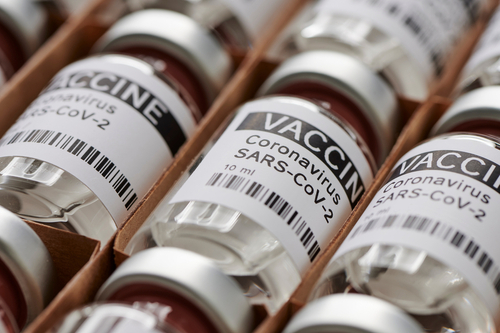
COVID-19 Vaccination Considerations for Employers

COVID-19 Vaccination Considerations for EmployersLooking at a 2009 letter from the U.S. Department of Labor, Occupational Safety and Health Administration (OSHA), employers may be able to require their employees to take the COVID-19 vaccine, with a few exceptions (such as the likelihood of a life-threatening reaction to it). With the COVID-19 vaccine being rolled out, how can employers balance workplace safety, maintain productivity and stay within the law?

According to the Centers for Disease Control & Prevention (CDC), the early vaccination stages will likely focus on those who are at particular risk of severe and life-threatening complications from COVID-19. This is expected to include elderly individuals, especially those who live in nursing homes. It’s also expected to include frontline healthcare workers who may be exposed to COVID-19 and could expose patients to COVID-19.

Looking to the Past for Guidance on Employer Vaccine Mandates

The natural question for employers is if and how they are able to mandate a COVID-19 vaccination for employees. When it comes to OSHA and the U.S. Equal Employment Opportunity Commission (EEOC), neither agency has given any actionable guidance on mandating the COVID-19 vaccine.

In light of an Emergency Use Authorization (EUA) for both the Pfizer and Moderna vaccines, further government agency direction is likely to follow over the next few months. Until there is more definitive guidance, the most relevant and likely direction is to look back at how the different agencies handled this same question with the H1N1 epidemic.

U.S. Equal Employment Opportunity Commission

In 2009, the EEOC provided guidance based on the Americans with Disabilities Act (ADA) and Title VII of the Civil Rights Act of 1964, which state that employers are within their right to mandate that workers take the flu shot. However, for workers with disabilities that prevent them from receiving inoculations and for workers objecting to vaccines according to their religious beliefs, their employer must provide a “reasonable accommodation.”

If a reasonable accommodation is available, the employer is responsible for providing it. However, according to the ADA, if a reasonable accommodation is not available; it would create an “undue hardship” for the business; or if the worker would “pose a direct threat” to their coworkers’ well-being and welfare that isn’t able to be reduced via the reasonable accommodation, employers aren’t required to provide that reasonable accommodation.

When it comes to the subjective reasonable accommodation and undue hardship test, the employer must look at the worker’s individual disability, his role and what responsibilities it entails, the type of vaccine being mandated, and the employer’s circumstances. For example, if someone cannot be vaccinated, they may be accommodated by continuing to work remotely, work within the constraints of social distancing guidelines, face masks, etc. However, if the worker’s role requires close contact with others, the ability of the employer to accommodate the employee will be more in question.

Title VII similarly requires business owners who mandate vaccines as a requirement of employment to make reasonable accommodations for workers who assert a sincerely held religious belief, practice, or observance that prevents the worker from accepting a vaccine. In this case, employers may ask the employee who claims a religious exemption for reliable documentation attesting to the religious objection.

Much like the ADA, Title VII also states that if the reasonable accommodation causes an undue hardship, the employer is not required to make such an accommodation. One distinction for this exception under Title VII is that the undue hardship standard is met when the “more than de minimis cost” to the business is reached. For the ADA’s undue hardship threshold to be met, the accommodation in question must create significant difficulty or expense. For employees who have non-religious beliefs that they explain prevents them from taking a vaccination, this is not covered under Federal Law but might be applicable in certain states.

Looking back to 2009, an OSHA letter stated that businesses can require employees to take a seasonal flu vaccine, with some caveats. One exception is if they have a pre-existing medical condition that can cause grave illness or death, they may qualify for an exemption. As the EEOC suggests, asking and not mandating that employees get vaccinated might garner good results before there’s any pushback from a vaccination mandate.

Businesses can offer vaccines at their place of work, paying for it for every employee who wants it. However, in the course of offering vaccines for workers, logistics must be considered because things are still evolving as the two vaccines (and others) are projected to become more and more available. Employers must consider the time frame of availability for vaccines (depending on the business’ industry, workers’ ages, etc.), pay for time spent on vaccination (potentially if there’s a reaction, etc.), how payment for vaccines will work, delivery and storage of the vaccine, etc.

While the rollout for the COVID-19 vaccine is ongoing, now is the time for employers to determine how they will handle the inoculation with their employees. 

Sources

https://www.osha.gov/laws-regs/standardinterpretations/2009-11-09

https://www.eeoc.gov/laws/guidance/pandemic-preparedness-workplace-and-americans-disabilities-act

https://www.eeoc.gov/foia/eeoc-informal-discussion-letter-254
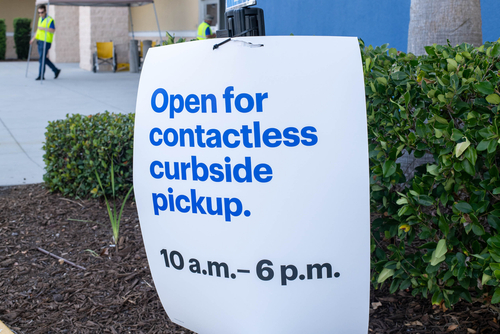
How Businesses Can Adapt, Grow During COVID-19

Businesses Grow During COVID-19In order to survive – and even thrive – during these unprecedented times, small businesses have had to find new ways to make money. The UPS Store’s Small Biz Buzz survey found that 41 percent of small businesses in the United States took steps to modify their businesses in hopes of survival. Fifteen percent provided customers with curbside delivery options, 28 percent moved to online sales as their primary source of sales, and 65 percent made a concerted effort to grow their e-commerce capabilities.

More than 50 percent of those polled by a U.S. Census Bureau Small Business Pulse Survey said it would be at least half a year before pre-COVID levels of business come back. Looking at overall economic recovery, and we could be waiting five years or more for things to return to where they were before. When it comes to small businesses, it might take even more time; however, businesses that adapt will be more likely to succeed.

In order to increase the chances of the pivot being successful, Harvard Business Review recommends doing so based on the newly created conditions of the crisis. In the case of the pandemic, it’s created more telecommuting, disrupted supply chains, and required everyone to socially distance for work, leisure, and daily tasks. In light of these circumstances, there are three factors for a pivot to be successful.

Social Distancing Opportunities

With the pandemic demanding less contact, chiefly through social distancing, businesses must find ways to work around the new circumstances. One example is how dating websites have added video dating for users. Other examples include grocery stores limiting in-store customers, requiring workers and customers to wear masks, and adding more and wider delivery areas for groceries and other products.

Building on Original Business Concept

The second recommendation by HBR is that businesses examine how additional and different services or products complement the original business concept.

Let’s consider Airbnb; when travel and resulting bookings collapsed, the platform’s hosts received financial assistance that helped facilitate guest relations virtually. In a shift from its non-hotel lodging option via homeowners and apartment dwellers offering their abode for rent, Airbnb moved to provide hosts with the ability to hold online events, such as cooking classes, art therapy, virtual tours, or other activities.

Looking to the future and building on the opportunity for growth, tourists could learn about new places to travel and things to do and learn while visiting the new destination.

Adapting to Change by Adding Value

The final ingredient of a successful pivot, according to HBR, is that the move demonstrates how well a company can adapt, work through problems and adjust to market forces while proving profitable and resonating as a value in the consumer’s view.

Before the lockdown orders, Spotify placed a sizeable portion of its business model on having primarily free customers stream music on personal devices. Spotify would benefit in two ways – they wouldn’t have to send out Spotify-specific devices, along with relying on receiving advertisers’ income that free users would listen to in exchange for a free Spotify membership. However, when the pandemic hit, Spotify’s advertisers cut their marketing budgets, making this business model difficult for Spotify to sustain.

Spotify’s pivot offered podcasts for users from music artists, talk show hosts, celebrities, etc. By offering premium subscriptions for its podcasts, along with curated, niche programming, Spotify gave customers more control and a better value over previous media offerings.

While the pandemic doesn’t necessarily mean a “going out of business sign” for companies, it could spell the end of the road for those that don’t adapt to the new economy.

Sources

https://www.uschamber.com/co/start/strategy/metlife-us-chamber-small-business-index-covid-19

https://hbr.org/2020/07/how-businesses-have-successfully-pivoted-during-the-pandemic

https://www.uschamber.com/co/start/strategy/pivoting-your-business-to-survive-pandemic

How to Effectively On-board & Train Employees Virtually

How to Effectively On-board & Train Employees VirtuallyWith COVID-19 still requiring remote working, companies that effectively on-board new workers retain their workers longer, have better worker performance, and increase their profits by almost 100 percent, according to the U.S. Chamber of Commerce. However, there are many considerations that companies should take during this important process.

For remote orientations, a welcome package that discusses the company’s products or services can be emailed to attendees prior to the live introduction. It’s also imperative that essential employees for the new hires (training and supervisors, for example) and existing employees who they will be working with are on the virtual meeting for introductions.  

Other considerations include maintaining a sense of professionalism. If a company has a dress code, training managers should serve as an example by dressing appropriately and communicating the requirement to new hires. This also can apply to the physical background of remote workers – having a professional-looking environment with muted colors.

Equip Workers With Varied Communication Tools

While almost everyone uses email to communicate, Harvard Business Review (HBR) suggests that email should not be the sole method of communication for remote workers. Along with team communication platforms, video conferencing benefits workers because communicating with body language helps normalize the remote work experience. Video conferencing with recording capabilities also can be used for online training so that employees may access this resource at their own convenience.

Managing Virtual Communication

Regardless of how virtual employees communicate, there needs to be some structure to find the right balance for efficiency. Examples could include using instant messages for urgent but simple communication needs. When it comes to video conferencing, consider touching base for 10 to 15 minutes once a day for a check-in or feedback session. Determining communication frequency depends on when workers work (different time zones, staggered shifts, etc.) and what’s effective for managers and employees.

Schedule a check-in phone call – either once a day or perhaps once in the morning and once in the late afternoon. It can be modified depending on the individual or the type of worker, be it a call with a single employee or an entire group if they are used to working together.

HBR says that workers are heavily influenced on how to deal with abrupt changes or crises based on their leaders’ actions. Whether a manager is calm and collected or anxious and not in control, those they are supervising will act similarly. Regardless of the situation, managers who empathize with feelings of uncertainty and give verbal encouragement will impart a sense of confidence to the entire team.

Regardless of how social a person is during office hours, the lack of morning greetings, break room conversations, water cooler chat, and saying goodbye when leaving the office reinforces the isolation of working remotely – and that can affect anyone.

Therefore, weaving in time for employees to build rapport is also recommended by HBR. Whether it’s going around virtually to ask how everyone’s weekend was, or having the company deliver a meal to remote workers for a virtual office party, it’s been reported that these types of activities relieve feelings of isolation and garner goodwill with the company.

Businesses that take the appropriate steps to build and develop a balanced remote workforce can survive and thrive, but only by adapting to the very different demands of working virtually.

Sources

https://www.uschamber.com/co/run/human-resources/onboard-employees-during-covid-19

https://hbr.org/2020/03/a-guide-to-managing-your-newly-remote-workers  

Plan for Business Continuity if Second Wave of COVID Hits

Covid-19 Second WaveWith winter around the corner and the threat of seasonal viruses looming, a second wave of COVID-19 poses a real threat to our health and business operations, according to Johns Hopkins Medicine.

Statistics from the Centers for Disease Control and Prevention (CDC) reveal that the 2019-2020 flu season took 24,000 lives and sickened 39 million individuals. Then when we add the fact that there are children who might not be receiving vaccinations – be it for the measles, whooping cough, and others – due to COVID-19, the risk for infections multiply.

Based on these factors, there’s a real possibility of a second wave of COVID-19 and other seasonal illnesses impacting business operations for the worse.

As the State of Washington’s Department of Commerce explains, there are many things that businesses can do to prepare for a second wave of the coronavirus. Here are a few recommendations that can be applied and modified, depending on the type of business.

The Washington State Department of Commerce recommends businesses use their digital presence, such as email, a website, blog or social media, to inform and connect with customers. There’s a balance that companies need to find between marketing and selling products or services and not sounding tone-deaf to the situation that COVID-19 has created.

For example, by creating a brief blog or social media post, companies can acknowledge that COVID-19 is a stressful time for everyone, but the company will still be there for them. Explaining how they’re taking care of their employees (social distancing, letting employees work from home and/or take time off for themselves or family members) and how they’re welcoming customers in-store or making house calls (with masks, social distancing, using technology when appropriate), it can create empathy and promote a sense of goodwill.

Another way to leverage digital communication channels is to create a standalone email address to funnel visitor and customer questions regarding COVID-19 concerns.

Planning on how to deal with food that won’t be used is an important step for organizations that deal with mass quantities of food. For schools, colleges, or universities that were open but have closed or others that want to make contingencies to close, the Environmental Protection Agency (EPA) recommends a few different avenues to make good use of food that would otherwise spoil. Organizations should make plans to donate to food banks or food rescue organizations; and there is also the EPA’s Excess Food Opportunities Map, which can direct unused food to composting options for businesses.

Another way for companies to prepare for a second wave of COVID-19, as the State of Washington’s Department of Commerce points out, is to ensure all documents are up-to-date and accessible via hard copy and electronically. Example documents include minutes and resolutions from official business meetings, tax records – especially any recently filed quarterly estimate payments – and lists of vendors. Companies also should ensure that digital files are encrypted, protected by passwords and that the cloud provider has a firewall, security scanning, and continually addresses vulnerabilities. 

Business owners should have contingency plans to deal with supply chain issues. One way to mitigate supplier issues, according to McKinsey & Company, is to negotiate with existing suppliers that have cash or liquidity issues.

By offering essential suppliers with loans, often at attractive interest rates compared to lenders, as a way to keep suppliers in business, businesses may be able to negotiate for exclusive or high priority production agreements. This can be done while looking for alternate suppliers, either domestically or in other parts of the world.

While the second wave of COVID-19 is a real possibility, taking steps to prepare for any surge in cases will help companies increase their chances to make it out of the pandemic.

Sources

https://www.hopkinsmedicine.org/health/conditions-and-diseases/coronavirus/first-and-second-waves-of-coronavirus

https://www.epa.gov/coronavirus/recycling-and-sustainable-management-food-during-coronavirus-covid-19-public-health#02

A ‘Between Waves’ COVID-19 Planner for Small Businesses

https://www.mckinsey.com/business-functions/operations/our-insights/coronavirus-and-technology-supply-chains-how-to-restart-and-rebuild

https://www.epa.gov/coronavirus/recycling-and-sustainable-management-food-during-coronavirus-covid-19-public-health

Three Strategies Companies Can Implement to Recover Faster

Business COVID-19 Recover FasterSmall businesses nationwide were already facing cash problems before the COVID-19 pandemic, according to McKinsey & Company. The firm found that almost one-third of small businesses were either seeing losses or making just enough to stay in business, but not realizing profitability.

Looking at businesses selling essential and non-essential items, McKinsey & Company reports that before satisfying their “interest, taxes, depreciation and amortization” obligations and accountings, they were facing challenging times. When it comes to selling essential items, such as food, business owners in this industry only had margins of 5 percent. For businesses selling non-essential items, this sector saw margins of less than 10 percent.

Restaurants provide an example of one way that outfits can pivot and increase margins by modifying their business models. While the Harvard Business Review (HBR) explains that restaurants have created additional seating near the kitchen to maintain social distancing, other examples of business model changes include increasing takeout, delivery, and catering as a way to increase sales for businesses with limited in-store dining.

While these ideas are simply expanding upon existing models to make up for lost in-dining experiences, HBR offers another way that a restaurant can better distinguish its establishment: developing a subscription model for customers. By slimming down menu choices for more efficient and faster preparation, restaurants could give customers the option to receive a certain number of meals per week or day for a fixed price.

Increasing Margins

While there are different types of margins for business owners to keep an eye on, an important one is a gross margin and how it impacts a business’ bottom line. Since the onset of COVID-19, businesses have been trying to survive as we work our way through the pandemic.

Regardless of the type of product being sold, by reducing the number of options available to customers, businesses can increase their margins by still meeting customer demand for necessities while also getting better prices from their suppliers through larger orders. This strategy also can be applied with contract manufacturers.

Re-engineering products and the ingredients that go into them can help to increase margins. For example, if there is a variety of pre-packaged foods that sell for the same price, but there are specialty or costlier ingredients like meat instead of vegetables, pausing selling pre-packed meals with meat can increase profit margins.

McKinsey & Company explains that small businesses are able to increase their hygiene and safety protocols by encouraging and implementing contactless experiences. Along with reducing person-to-person contact by using mobile apps, restaurants also have made delivery and takeout a bigger part of their sales.

With small businesses like boutiques and farmers, HBR illustrates how these entities can explore different sales channels. With stores facing shortages and an inability to stock essential goods –  especially food items – small farmers saw an opportunity to reinvent their business models after restaurants and gourmet markets dropped purchases from them during the stay-at-home orders.

An investment in an online presence, shipping and logistics, and sustained sales and marketing efforts have real potential for businesses to become profitable as trends point to a direct-to-consumer model. However, going with a digital storefront such as Shopify and selling directly to retail customers, HBR pointed out that some farmers are able to capture local customers (15 miles or less). This shows how farmers have been able to migrate from one source of revenue to another.

While the pandemic is ongoing, these are just a few ways that companies can implement new strategies to generate cash flow and attempt to survive the COVID-19 pandemic. 

Sources

https://www.mckinsey.com/industries/public-and-social-sector/our-insights/us-small-business-recovery-after-the-covid-19-crisis

https://hbr.org/2020/07/how-businesses-have-successfully-pivoted-during-the-pandemic