
Shoring up Protections for Sexually Abused Children, the Mentally Ill in Crises, and a Benefit Increase for Disabled Veterans

Shoring up Protections for Sexually Abused Children, the Mentally Ill in Crises, and a Benefit Increase for Disabled VeteransEliminating Limits to Justice for Child Sex Abuse Victims Act of 2022 (S 3103) – Introduced by Sen. Richard Durbin (D-IL) on Oct. 28, 2021, this Act eliminates the statute of limitations for civil lawsuits by anyone who, as a minor, was a victim of human trafficking or a federal sex crime. The bill passed in the Senate on March 2, in the House on Sept. 13, and was signed into law on Sept. 16 by President Biden.

Law Enforcement De-Escalation Training Act of 2022 (S 4003) – This bill would authorize training for de-escalation and alternatives to the use of force when law enforcement officers are called to a scene involving mental and behavioral health and suicidal crises. The Act was introduced by Sen. John Cornyn (R-TX) on April 5. It passed in the Senate on Aug. 1 and is currently under consideration in the House.

National Aviation Preparedness Plan Act of 2022 (HR 884) – This legislation directs the Department of Transportation (DOT), in consultation with the aviation industry and labor stakeholders such as air carriers, to develop a national aviation preparedness plan for future outbreaks of communicable diseases. The plan must include provisions for frontline, at-risk workers to be equipped with the appropriate personal protective equipment (PPE) to reduce exposure and spread of the disease. The bill was introduced by Rep. Rick Larson (D-WA) on Feb. 5, 2021. It was passed in the House on Sept.14and has moved to the Senate.

Veterans’ Compensation Cost-of-Living Adjustment Act of 2022 (HR 7846) – This legislation was introduced by Rep. Elaine Luria (D-VA) on May 19. It proposes a cost-of-living increase beginning Dec. 1 for the compensation of veterans with service-connected disabilities as well as dependency and indemnity compensation for the survivors of certain disabled veterans. The bill passed in the House on Sept. 14 and is currently under consideration in the Senate.

Securing and Enabling Commerce Using Remote and Electronic Notarization Act of 2022 (HR 3962) – Introduced by Rep. Madeleine Dean (D-PA) on June 17, 2021, this bill would permit notaries public to perform electronic notarizations and remote notarizations for matters pertaining to interstate commerce. The Act specifies that minimum standards be established, and that all Federal courts be required to recognize notarizations performed by a notarial officer of any state. This bipartisan bill passed in the House on July 27 and has a very high chance of passing in the Senate.

Jenna Quinn Law (S 734) – On March 11, 2021, Sen. John Cornyn (R-TX), re-introduced this bill from an earlier version he proposed in 2019. The legislation would amend the Child Abuse Prevention and Treatment Act to authorize grants for training and education to teachers (as well as other school personnel, students and the community)for sexual abuse awareness and prevention programs among primary and secondary school students. The bill passed unanimously in the Senate on Aug. 3 and is awaiting further action by the House.
Productive Month Passing Domestic Manufacturing and Prescription Drug Allowances, Climate and Gun Violence Mitigation, and Veteran Burn Pit Healthcare Legislation

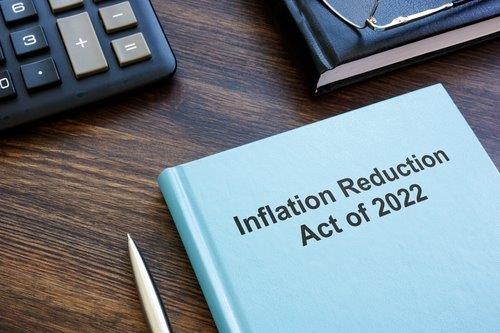
Productive Month Passing Domestic Manufacturing and Prescription Drug Allowances, Climate and Gun Violence Mitigation, and Veteran Burn Pit Healthcare LegislationInflation Reduction Act of 2022 (HR 5376) – This legislation was originally introduced as the Build Back Better Act, President Biden’s signature bill of 2021. After suffering defeat in the Senate, the bill was later revised with fewer provisions to enhance its likelihood of passage, and renamed the Inflation Reduction Act. The bill authorizes funding for investments in domestic energy production and manufacturing with the goal of reducing U.S. carbon emissions by 40 percent by 2030. The bill provides tax credits for clean energy home enhancements and electric vehicle purchases, permits Medicare to negotiate prescription drug prices,and extendslower healthcare premiums for insurance purchased via the Affordable Care Act program through 2025. Also billed as a deficit reduction tool, the legislation imposes a minimum 15 percent corporate tax rate on large businesses with more than $1 billion in reported income, and a 1 percent excise tax on corporate stock buybacks. Furthermore, the bill increases previously reduced funding for the IRS in order to help track down and recoup taxes unlawfully skirted by high income earners. Initially introduced on Sept. 27, 2021, the Act was passed by both the House and the Senate in August and signed into law on Aug. 16.

CHIPS and Science Act of 2022(HR 4346) – This legislation includes $280 billion in funding to build a domestic supply chain for semiconductor chips as well as scientific and technological research to help keep U.S. industries competitive. The bill authorizes new and expanded investments in STEM education for K-12 to community college, undergraduate and graduate education.The bill was enacted on Aug. 9.

Bipartisan Safer Communities Act (S 2938) – Introduced by Sen. Marco Rubio (R-FL) on Oct. 5, 2021, this Act expands background checks for anyone under age 21 who seeks to purchase firearms, and offers incentives for states to pass red flag laws to remove weapons from people deemed a threat to themselves or others. The bill provides $11 billion in funding for mental health services in schools and local clinics, and to support mental health courts, drug courts, veterans’ courts and extreme risk protection orders. The final version of the bill passed in the Senate on June 23 and in the House on June 24. President Biden signed the bill into law on June 25.

Honoring our PACT Act of 2022 (S 3373) – This legislation, which expands healthcare benefits for veterans who were exposed to burn pits and other toxic substances while on active duty, was introduced by Sen. Tim Kaine (D-VA) on Dec. 9, 2021. Amid much fanfare and controversy this summer, this bipartisan bill was finally passed in both the House (July) and the Senate (August, requiring a second vote) and was signed into law by President Biden on Aug. 10.

PPP and Bank Fraud Enforcement Harmonization Act of 2022 (HR 7352) – Introduced by Rep. Nydia Velazquez (D-NY) on March 31, this bill amends the Small Business Act to extend the statute of limitation to 10 years for criminal charges and civil enforcement against borrowers under the Paycheck Protection Program, enacted during the early stages of the COVID-19 pandemic. The bill passed in the House on June 8 and in the Senate on June 28. It was enacted on Aug. 5.

Strengthening the Supply Chain, the Professional Workforce, Cybersecurity and Coastal Ecosystems

Strengthening the Supply Chain, the Professional Workforce, Cybersecurity and Coastal EcosystemsSupply Chain Security Training Act of 2021 (S 2201) – This legislation is designed to identify supply chain risks and develop a government program to train federal officials with supply chain risk management responsibilities to prepare and mitigate those risks. The training program would cover the complete acquisition life cycle, including funding for data access and processing as well as appropriate technology and communication vehicles. The bill was introduced by Sen. Gary Peters (D-MI) on June 23, 2021. It passed in the Senate on Jan. 11 and in the House on May 10. It was signed into law by the president on June 16.

Bridging the Gap for New Americans Act (S 3157) – Introduced by Sen. Amy Klobuchar (D-MI) on Nov. 3, 2021, this bill recently passed in the Senate on June 23 and is in the House for consideration. The bipartisan bill would authorize a study on employment opportunities for naturalized and lawfully present non-U.S. citizens who hold professional credentials from non-U.S. countries. For example, the opportunity to employ doctors with medical degrees to help meet U.S. demand in the growing shortage of physicians. The Department of Labor would identify and recommend how to address factors that affect their qualifications for U.S. jobs in various fields of expertise.

State and Local Government Cybersecurity Act of 2021(S 2520) – This legislation expands the Department of Homeland Security (DHS) responsibilities for mitigating cybersecurity threats, risks and vulnerabilities with more proactive and defensive measures.The Act was introduced by Sen. Gary Peters (D-MI) on July 28, 2021. It passed in the Senate on Jan. 11 and in the House on May 17. It was signed into law on June 21.

South Florida Clean Coastal Waters Act of 2021 (S 66) – An algal bloom is a rapidly growing algae that can produce toxic conditions harmful to humans, animals, aquatic ecosystems and the economy. They are most prevalent in South Florida. The bill, introduced by Sen. Marco Rubio (R-FL) on Jan. 27, 2021, directs the Inter-Agency Task Force on Harmful Algal Blooms and Hypoxia to develop a plan to address how to reduce and control theeffects of the blooms throughout the South Florida ecosystem. This legislation passed in the Senate on March 8 and in the House on May 11. President Biden signed the bill into law on June 16.

Active Shooter Alert Act of 2022 (HR 6538) – Introduced by Rep. David Cicilline (D-RI) on Feb. 1, this bill would direct the Department of Justice to set up a national alarm system specifically to warn citizens of an active shooter event. The DOJ also would work with state, tribal and local governments to coordinate networks and establish procedures for how to respond to active shooters. The bill passed in the House on July 13. It is presently under consideration in the Senate, where it faces opposition because many believe it duplicates the existing Integrated Public Alert and Warning System (IPAWS). The premise is that a separate system for active shooter events would risk desensitizing citizens with false alarms.

Advanced Air Mobility Coordination and Leadership Act (S 516) – This bill was introduced by Sen. Jerry Moran (R-KS) on March 11, 2021. It passed in the Senate on March 23, 2022, and in the House on June 14, but the House made changes and returned it to the Senate. The purpose of this legislation is to establish an Advanced Air Mobility (AAM) interagency task force to plan and coordinate efforts for urban-based cargo and passenger aircraft (e.g., drones, air taxis, air ambulances) in the United States. The program would address matters related to safety, infrastructure, physical security, cybersecurity and federal investment in order to integrate these new aircraft into existing airspace operations.

Women’s Health Protection Act of 2022 (HR 8296) – Introduced by Rep. Judy Chu (D-CA) on July 7, this bill passed the House on July 15 and is currently with the Senate. The bill would prohibit state governments from restricting access to abortion services (via drug prescription, telemedicine or immediate action) in situations where the provider determines that birth would endanger the mother’s life.

Protecting SCOTUS, Veterans in Special Circumstances, Disaster Victims, Potential Firearm Victims, and America’s Water Resources

America's Water ResourcesSupreme Court Police Parity Act of 2022 (S 4160) – In response to potential threats and protests outside the homes of Supreme Court judges following a leak of their preliminary judgement on a case related to Roe vs. Wade, this bill authorizes extra security for the justices and their families. Specifically, Supreme Court justices and their families would be provided with security detail similar to that of other top government officials and families in the executive branch (e.g., the president and vice president) and legislative branch (e.g., Speaker of the House and Senate Majority Leader). This type of detail generally cannot be declined. The bill was introduced by Sen. John Cornyn (R-TX) on May 5. It passed in both the Senate and the House on June 14 and was signed into law by the president on June 16.

Honoring our PACT Act of 2021 (HR 3967) – Introduced by Rep. Mark Takano (D-CA) on June 17, 2021, this bill recently passed in both the House and the Senate, but was returned with changes to the House on June 16. PACT is an acronym for Promise to Address Comprehensive Toxins Act. The bipartisan legislation, with 100 sponsors, would permit veterans who were exposed to burn pit smoke and other environmental hazards that caused cancers and other illnesses during their service, to receive health coverage for those ailments.

Air America Act of 2022 (S 407) – Air America was a government-owned airline deployed between 1950 and 1976 for the purpose of conducting certain covert operations in Southeast Asia during the Vietnam War. This bill is designed to restore benefits to the employees who worked for Air America during that period. Benefit applications must be filed within two years of the bill’s enactment. This legislation was introduced on Feb. 24, 2021, by Sen. Marco Rubio (R-FL). It passed in the Senate on June 14 and is currently in the House for consideration.

Post-Disaster Assistance Online Accountability Act (HR 2020) – Introduced by Jenniffer González-Colón, Resident Commissioner for Puerto Rico (R-PR) on March 18, 2021, this bill establishes a centralized website to publish information on disaster assistance. The Small Business Administration, the Department of Housing and Urban Development and other federal agencies that provide disaster assistance must submit the following information for publication on a quarterly basis: 1) the total amount of assistance provided by the agency; 2) the amount provided that was disbursed or obligated; and 3) a detailed list of all projects and activities to which assistance was allocated. The bill passed in the House on May 13 and is under consideration in the Senate.

Protecting Our Kids Act (HR 7910) – The bill was introduced by Rep. Jerry Nadler (D-NY) on May 31 and passed in the House on June 8. The purpose of this legislation is to ban the sale or transfer of certain semiautomatic firearms to anyone under age 21; establish new federal criminal offenses for gun trafficking; regulate guns that do not have serial numbers (ghost guns); regulate the storage of firearms on residential premises at federal, state and tribal levels; regulate bump stocks under federal firearms laws; and generally prohibit the import, sale, manufacture, transfer and possession of large capacity ammunition feeding devices. The bill is currently facing significant challenges in the Senate, where a bipartisan committee is working on an alternative.

Water Resources Development Act of 2022 (HR 1766) – This legislation authorizes the U.S. Army Corps of Engineers to implement projects associated with water resources development, including water supply and wastewater infrastructure, flood control, navigation and ecosystem/ shoreline restoration. The Act was introduced by Rep. Peter DeFazio (D-OR) on May 16. It passed in the House on June 8 and is currently under consideration in the Senate along with other similar bills.

Rushing Baby Formula supplies, Helping Ukraine and Punishing Russia

Rushing Baby Formula supplies, Helping Ukraine and Punishing RussiaTo amend the Child Nutrition Act of 1966 to establish waiver authority to address certain emergencies, disasters and supply chain disruptions, and for other purposes. (HR 7791) – In response to the recent nationwide shortage of infant formula, Congress passed a bill authorizing $28 million to fund emergency supplies and to address the potential for future shortages due to emergencies, disasters or supply chain disruptions. The bill was introduced by Rep. Jahana Hayes (D-CT) on May 17. It passed in the House on May 18 and unanimously in the Senate on May 19. It is currently awaiting signature by the president.

Ukraine Democracy Defense Lend-Lease Act of 2022 (S 3522) – This legislation was introduced on Jan. 19, by Rep. John Cornyn (T-TX). It passed in the Senate on April 6, the House on April 28, and was signed into law by President Biden on May 9. The bill waives certain requirements that constrain the president’s authority to lend or lease defense articles intended for Ukraine’s government or other Eastern European countries affected by Russia’s war. For example, prohibiting a loan or lease period of more than five years. Furthermore, the president must establish procedures to ensure quick delivery of defense articles loaned or leased to Ukraine. The provisions of this bill are scheduled to terminate at the end of FY 2023.

Additional Ukraine Supplemental Appropriations Act, 2022 (HR 7691) – Introduced by Rep. Rosa DeLauro on May 10, this bill authorizes $40.1 billion in emergency funding for U.S. agencies to aid Ukraine’s response to Russia’s invasion. The funding is available only through fiscal year 2022 (which ends Sept. 30). The appropriations are designed to provide defense equipment, migration and refugee assistance, support for nuclear power issues, emergency food assistance, economic assistance, and property seizures related to the invasion. U.S. agency recipients include the Department of Justice, the Department of Defense, the Nuclear Regulatory Commission, the Department of Health and Human Services, the Department of State, the U.S. Agency for International Development, the Department of Agriculture and the Treasury Department. The bill passed in the House and Senate on May 19 and awaits the president’s signature.

Ukraine Comprehensive Debt Payment Relief Act of 2022 (HR 7081) – This bill is designed to advocate debt assistance for Ukraine among domestic and international financial institutions. Specifically, the legislation calls for an immediate suspension of Ukraine’s debt service payments to respective institutions, offering concessional financial assistance to Ukraine, and providing economic support to both refugees from Ukraine and to the countries receiving them. The bill was introduced by Rep. Jesus Garcia (D-IL) on March 17. It passed in the House on May 11 and is under review in the Senate.

Russia and Belarus SDR Exchange Prohibition Act of 2022 (HR 6899) – The purpose of this legislation is to prevent financial assistance to Russia or Belarus. Specifically, it prohibits the U.S. Treasury Department from making transactions that involve the exchange of Special Drawing Rights held by the Russian Federation or Belarus. Special Drawing Rights (SDR) are reserve assets contributed by member countries and maintained by the International Monetary Fund (IMF). The act was introduced by Rep. French Hill (R-AK) on March 2. It passed in the House on May 11 and is in the Senate.

Isolate Russian Government Officials Act of 2022 (HR 6891) – Introduced by Rep. Ann Wagner (R-MO) on March 2, this bill is designed to exclude Russian government officials from certain international meetings, such as the Group of 20, the Basel Committee for Banking Standards, and the Bank for International Settlements. The bill’s mandate is scheduled to end either within five years, or 30 days after the president has reported (to Congress) the end of the Russian-Ukraine war. The act passed in the House on May 11; it currently resides in the Senate.

Asset Seizure for Ukraine Reconstruction Act (HR 6930) – This bill would authorize a task force to identify legal actions that can be used to confiscate the assets of foreign individuals affiliated with Russia’s political leadership. The work group also is directed to report (to Congress) its recommendations for more energy-related sanctions on Russia’s government, as well as any additional authority the president can use to seize assets. The act was introduced by Rep. Tom Malinowski (D-NJ) on March 3. It passed in the House on April 27 and is under consideration in the Senate.