
New Rules and Ways to Use HSAs/FSAs

New Rules and Ways to Use HSAs/FSAsPeople who own a high-deductible health insurance plan may have the ability to open a health savings account (HSA). They can contribute pre-tax income to an HSA and invest the money for tax-free growth in a variety of mutual funds, stocks and exchange-traded funds (ETFs).

The funds may be withdrawn tax-free when used to pay for qualified expenses, such as the plan’s high deductible, copayments and coinsurance. The funds also can be used to purchase a wide range of health-related products.

However, a recent poll found that 40 percent of respondents who have access to a health savings account do not fully understand them. Perhaps that is why legislation passed last year that increased eligible uses of HSA funds largely went under the radar. The CARES Act included a provision that greatly expanded the number and types of health-related products and services that can be paid for with money from an HSA or an employer-sponsored Flexible Spending Account (FSA). The following list includes many of the newly eligible expenses (some require a Letter of Medical Necessity (LMN) from a licensed provider):

  • Over-the-counter medications, such as for fever, cold and flu, headache, muscle aches, acid, heartburn and indigestion relief, allergy and sinus relief, anti-diarrheal and constipation medicine
  • Toothache relief
  • Skin and rash ointments, medicated body lotions
  • Rubbing alcohol
  • Thermometers
  • Band-Aids and bandages
  • Kinesiology tape
  • Hot and cold therapy packs, cooling headache pads
  • Eye drops
  • Facial cleansers, face wipes
  • Prescription acne medication and over-the-counter acne treatments
  • Sunscreen and SPF moisturizers (including expensive anti-aging facial lotions with SPF protection)
  • Lip balm for sun protection and chapped lips
  • Sleep and snoring aids
  • Smoking cessation nicotine gum, patches, lozenges, inhalers and nasal sprays
  • Prescription sunglasses
  • Humidifiers, air purifiers and filters
  • Dietician fees
  • Some mental health treatments and services
  • Prescription hormone replacement therapy
  • Birth control pills
  • Pregnancy tests
  • Fertility tests
  • Fertility treatments such as in vitro fertilization, intrauterine insemination, fertility medication, the temporary storage of eggs or sperm
  • Birth classes and medically certified doulas
  • Breast pumps, breastfeeding classes, absorbent breast pads, breast milk storage bags
  • Baby monitors and potty training undies
  • Feminine care items, such as pads, tampons, cups and sponges
  • DNA/Ancestry kits

In 2021, the contribution limit for a health savings account is $3,600 for individuals and $7,200 for families; anyone age 55 or older can make an additional $1,000 annual contribution.

Just recently, the IRS published guidelines for employers regarding the use of Flexible Spending Account funds. Because of social distance guidelines and shutdowns in 2020, many people continued to work from home and contribute to their FSA but were unable to use those funds, which are generally designed to be used in the year saved (or otherwise lost).

The new guidelines allow employers to carry over or extend the grace period for unused health and/or dependent care FSA funds to the immediately following plan year. This new rule is retroactive for the 2020 and 2021 plan years. Note that while the IRS permits these new extension rules, it’s up to employers to decide what they want to do.

7 Ways to Save 10K a Year

If you’re scratching your head and wondering if we’ve lost our minds, please keep reading. You can do this. All you need to do is plan your steps – and stick to it. After all, Confucius says, “A journey of a thousand miles begins with a single step.” So let’s get moving.
Save Before You Spend

This might well be the opposite of what you do: you get your weekly or monthly paycheck, determine what expenses are ahead, then dedicate what’s left to savings. To save $10,000, the first thing to do is put away the money you’ve designated to reach your goal first (50 percent? 25 percent?), then live off the amount that’s left. Yes, it’s backwards, but in the end it’s the way forward to realize your 10k dream.

Set Up a High-Interest Savings Account

So that cash you’ve set aside? Deposit it into a savings account that will make your money grow. Several good options are Vio Bank (APY: 0.57 percent), Comenity Direct (APY: 0.55 percent), and Ally Bank (APY: 0.5 percent). This could mean the difference of hundreds (or even thousands) of dollars of interest over time.

Baby Step Your Way There

Break your goal into small chunks. Let’s say your monthly savings goal to get to 10k is $500 a month. If that’s too overwhelming, break it into two $250 chunks. If that’s too much, $125 a week, and so on. You can even parse out per day: $500 divided by 30 days in a month = $16. You can do this!

Start a Side Hustle

If you find you can’t make the amount you want to save each month and you aren’t able to tailor your expenses to fit your goal, start a side gig. For instance, if you’re able-bodied, consider helping people move and/or helping them assemble furniture. Other options include babysitting, food delivery, taking market research surveys, running errands and more. TaskRabbit is a great resource to find all kinds of ways to increase your income.

Cut Unnecessary Expenses

Look closely at your expenditures. Decide if you’re really reading that magazine and think about canceling the subscription. Pack a lunch and/or cook in for dinner. Call your internet and cell phone provider to see if they have a better deal. If you want to add an extra $1,000 to your savings each year, all you have to do is cut out $84 a month. This is doable.

Commit to a Budget

Everything that means something requires hard work and commitment. Take an afternoon, put it all down on paper, and promise to live within a dedicated financial scope. Compare your short-term gratification to your long-term financial goal. Imagine how good you’ll feel when you’ve saved $10,000. The power of visualization works.

Track Your Progress

If you’re feeling overwhelmed along the way, it pays to go back and see how far you’ve come – and we’re talking literally see it. Make your milestones visible. Hang a chart in your kitchen and color it in when you make a deposit. Or if you’re more analytical, create a spreadsheet, but keep it on your desktop. Checking this every day will help keep you on point.

Saving for a goal like this can be fun and even exciting. All you have to do is be mindful, make a conscious decision to follow your plan, and your 10k dream will be realized before your know it.

Sources

How To Save $10,000 In A Year (10 Simple Tips)

https://www.bankrate.com/banking/savings/rates/

E-Invoicing Presents Opportunities for Businesses to Save

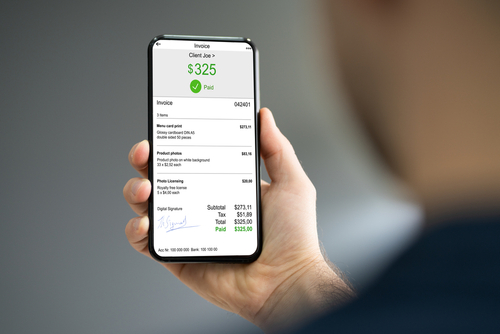
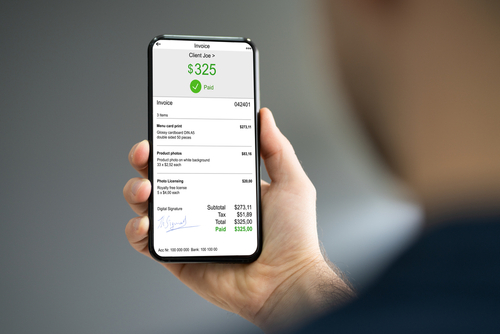
E-Invoicing Presents Opportunities for Businesses to SaveInvoicing is an important process in any business. Unfortunately, it’s also a laborious process that requires accuracy. With technology advances, businesses have tried to use various means to ease the invoicing process. Some outfits send scanned invoices; others might transfer PDFs through email; and some still use manual invoices. In this technology age, businesses are choosing to automate functions in a bid to increase overall business productivity and efficiency. E-invoicing is a technology that promises to help entrepreneurs add value to their businesses.

What is E-Invoicing?

E-invoicing is the exchange of an invoice between a buyer and seller using an integrated electronic format. This allows the buyer to pay online through a card payment, direct debit or other option after receiving the e-invoice.

E-invoicing is not a new technology; it’s already used by large scale businesses and governments. Some governments have already mandated the use of e-invoices from their suppliers and even for taxpayers. These programs have been running onsite, making it expensive for small and medium businesses (SMB) to use. Another challenge for SMBs has been dealing with multiple providers who have different platforms and technologies. This is a challenge because it requires a business to support extra business processes when sending or receiving invoices.

However, the rise of cloud computing and Software as a Service (SaaS) technologies has become an enabler for SMBs to implement e-invoicing.

Making e-invoicing available as SaaS eliminates complicated system installations and integrations that have previously been a challenge to SMBs. The SaaS systems come with features that allow you to automate the invoicing process, send reminders, accept online payments and generate reports, among other things.

Benefits of E-Invoicing

Here are some reasons that businesses are moving to e-invoicing:

  • Eliminates the manual process of sending invoices between a buyer and seller.
  • Prevents human error with the use of a template. The automated e-invoice ensures correct data is used with a validation process. This ensures there is no mistyped information, no data entry errors, no double entry, missed details or wrong data. Therefore, it improves accuracy.
  • Low cost of processing, since it helps to cut down on administration costs and printing invoices. It also saves a business from the task of sending emails back and forth concerning an invoice.
  • Maintains a more predictable cashflow as e-invoicing facilitates the seller receiving payment faster.
  • Enables ease of tracking invoices as you can track and trace the entire document journey. This means better accounting.
  • Enhanced convenience. Businesses create a different number of invoices depending on their transactions. E-invoicing provides a convenient way to store the invoices and easily retrieve them when needed.
  • Saves on time so you can concentrate on other business activities. There is no need to waste time looking for client information and entering data every time you need to send an invoice.
  • Improves the accounting process. When a business integrates e-invoicing with an accounting system, the invoicing function is faster and easier to handle.
  • Enhances invoice security and guaranteed delivery. There is no risk of invoices getting lost in the mail or landing in junk email. Encrypted file transfer and digital signatures are used to enhance security.
  • Real-time processing, which allows one to view the live delivery and processing status of an invoice.
  • Remote handling as SaaS can be accessed from anywhere. This makes it possible to send an invoice anytime and from anywhere as there is no need for printers or scanners.

Conclusion

The business environment is becoming increasingly competitive and the adoption of technology that automates processes can only help. E-invoicing provides an opportunity for business owners to effectively use their time on growing their business instead of spending it on a labor-intensive administration process. This service also helps SMBs align themselves with large corporations.

Finally, as with any technology, business owners should take time to research which e-invoicing service provider will best serve their unique business needs.

Advancing Healthcare Initiatives, Small Business Funding and Protecting the Elderly from Scams

Advancing Healthcare Initiatives, Small Business Funding and Protecting the Elderly from ScamsFASTER Act of 2021 (HR 578) – This bill expands the definition of major food allergens for food-labeling purposes to include sesame. It is designed to protect Americans with food allergies and related disorders that could be affected by anaphylaxis, food protein-induced enterocolitis syndrome, and eosinophilic gastrointestinal diseases. It also authorizes the Department of Health and Human Services to report on food allergy research and data collection activities. The bill was introduced by Rep. Tim Scott (R-SC) on March 3. It was passed by Congress on April 14 and is currently awaiting enactment by the president.


Advancing Education on Biosimilars Act of 2021 (S 164) – This bill was introduced by Sen. Margaret Hassan (D-NH) on Feb. 2. The legislation requires the Food and Drug Administration (FDA) to educate and promote awareness about biological products and biosimilars among healthcare providers. The FDA may also host a website to provide educational materials. This bill was passed by Congress on April 14 and is awaiting signature by the president.

TRANSPLANT Act of 2021 (HR 941) – This bill reauthorizes the Stem Cell Therapeutic and Research Act of 2005, which makes genetically matched cord blood stem cells available to patients who need them. The legislation was re-introduced by Rep. Doris Matsui (D-CA) on Feb. 8 and passed in the House on April 15. It is currently under consideration in the Senate.

504 Credit Risk Management Improvement Act of 2021 (HR 1482) – Introduced by Rep. Dan Bishop (R-NC) on March 2, this bill passed in the House on April 16 and goes to the Senate next for consideration. It amends the Small Business Act to require the administrator of the Small Business Administration to issue rules relating to environmental obligations of certified development companies and for other purposes.

504 Modernization and Small Manufacturer Enhancement Act of 2021 (HR 1490) – This bill was introduced by Rep. Angie Craig (D-MN) on March 2 and passed in the House on April 15. It is currently under consideration in the Senate. The bill would amend the Small Business Investment Act of 1958 to improve the loan guaranty program in order to enhance the ability of small manufacturers to access affordable capital. In addition, the bill adds policy goals, such as facilitating reduced costs via energy-efficient products and generating renewable energy, and providing aid to revitalize disaster areas. The bill also would increase the maximum loan amount from $5.5 million to $6.5 million for small manufacturers, and reduce the amount that they must contribute to project costs, among other provisions. The legislation authorizes each SBA district office to engage a resource partner to provide training for small manufacturers.

Fraud and Scam Reduction Act (HR 1215) – This bill would establish an office within the Federal Trade Commission and an outside advisory group for the purpose of preventing fraud that specifically targets the elderly, including mail, telephone and internet scams. Furthermore, the bill would create a Senior Scams Prevention Advisory Group to create educational materials for distribution to employees of retailers, financial services, and wire-transfer companies to help them identify and prevent scams that affect older adults. The FTC also would establish an advisory office within the Bureau of Consumer Protection to monitor scams targeting older adults, educate consumers and receive complaints. The bill was introduced by Rep. Lisa Blunt Rochester (D-DE) on Feb. 23. This bill passed in the House on April 15 and goes to the Senate next for consideration.

Tax-Free Student Loan Forgiveness is Part of the Latest Covid-19 Relief Bill

Tax-Free Student Loan ForgivenessThe recently passed American Rescue Plan (ARP) Act of 2021 includes a provision making nearly all student loan forgiveness tax-free, at least temporarily. Before the ARP, student loan forgiveness was tax-free only under special programs. Before we look at the changes to come under the ARP, let’s look back at what the previous law provided.

The Old Rules

Under the earlier measure, student loan forgiveness was tax-free under certain circumstances. These special programs included working in certain public sectors, some types of teachers as well as some programs for nurses, doctors, veterinarians, etc. Essentially, you had to work in a specific field under certain conditions for a minimum length of time and some or all your student loans would be forgiven or discharged. There are also other technical qualifications, such as death and disability, closed school, or false certification discharges, but these aren’t widely applicable.

Because student loans are not dischargeable in bankruptcy, income-driven repayment plans were the other main type of program that could result in forgiveness or discharge. Typically, borrowers repaid an amount indexed to their income over a 20-to 25-year period; whatever was leftover at the end was discharged. The forgiven loan amounts under income-driven repayment programs were considered a discharge of indebtedness and tax as ordinary income (although there are exclusions for insolvent taxpayers).

The New Rules

Under the new law in the ARP, the forgiveness of all federal student and parent loans are tax-free. This includes Direct Loans, Family Federal Education Loans (FFEL), Perkins Loans, and federal consolidation loans. Additionally, non-federal loans such as state education loans, institutional loans direct from colleges and universities, and even private student loans also qualify.

The essential criteria for the loan discharge to qualify for tax-free treatment is that it must have been made expressly for post-secondary educational expenses and be insured or guaranteed by the federal government (this includes federal agencies).

This all means that the debt discharged under income-driven forgiveness programs will now be tax-free as well, but there’s a catch. The discharge of student loan debt needs to happen within the next five years because the provision expires at the end of 2025. There could be an extension, but that’s uncertain now.

Why this Change May Really Matter

The change in rules making income-driven student loan forgiveness tax-free isn’t a huge deal for most people. The new law really matters because it sets the stage for broader student loan forgiveness. The program currently being floated by President Biden to forgive $10,000 in student loan debt or the even larger $50,000 proposal by some Senate Democrats will qualify for tax-free treatment.